Azim Uddin

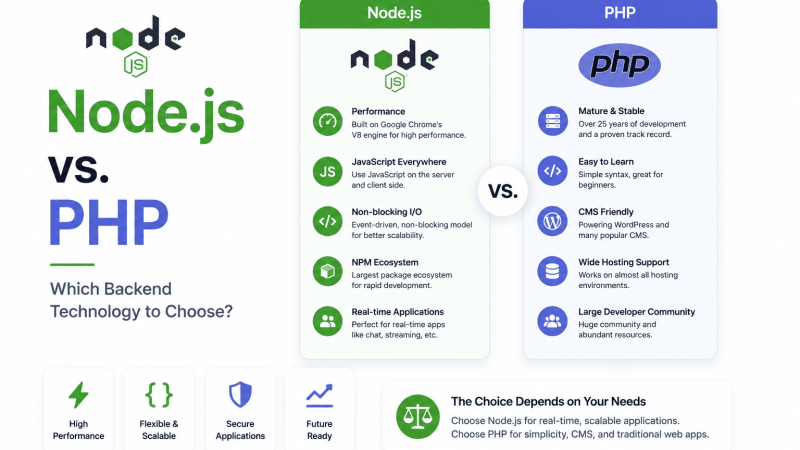
Node.js vs. PHP: Which Backend Technology to Choose?

Introduction: The Backend Dilemma in Modern Web Development The choice between Node.js and PHP represents one of the most consequential decisions in modern backend development. Both technologies power millions of websites and applications, yet they approach the server-side challenge from fundamentally different angles. PHP, born in 1994, emerged as a straightforward scripting language designed to […]
Read More

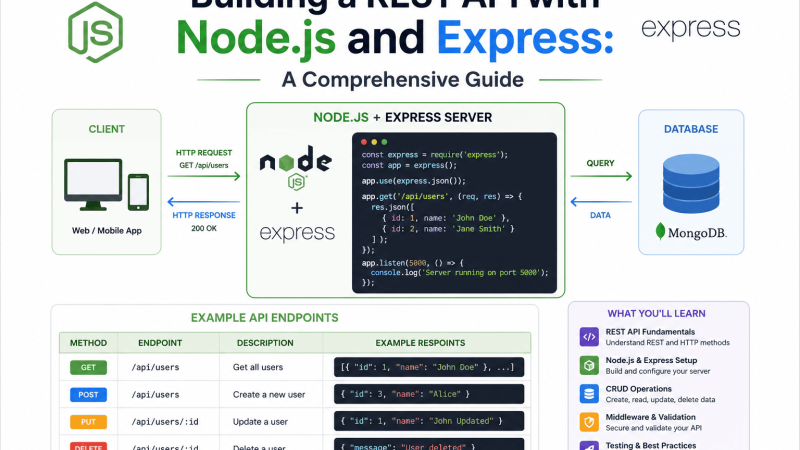
Building a REST API with Node.js and Express: A Comprehensive Guide

Introduction to REST APIs and Node.js What is a REST API? Key Principles and Constraints A REST (Representational State Transfer) API is an architectural style for designing networked applications that rely on stateless, cacheable communication via HTTP. It enables clients and servers to exchange resources—such as data objects or files—using standard HTTP methods like GET, […]

Read More

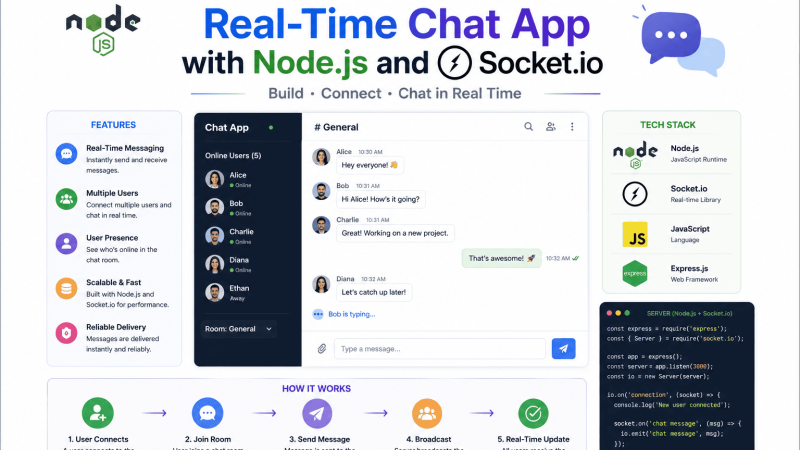
How to Build a Real-Time Chat App with Node.js and Socket.io

1. Introduction to Real-Time Chat Applications Real-time chat applications have transformed how individuals and organizations communicate online, enabling instantaneous message exchange without the perceptible delay typical of traditional web interactions. Unlike standard HTTP-based communication, where a user must refresh a page or wait for a periodic update, real-time systems push data to clients the moment […]

Read More

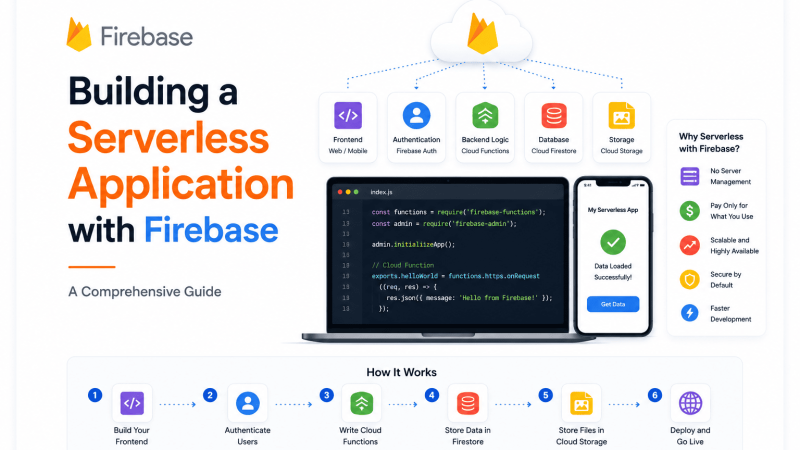
Building a Serverless Application with Firebase: A Comprehensive Guide

Introduction to Serverless Architecture and Firebase What Is Serverless Computing? Serverless computing is a cloud execution model where the cloud provider dynamically manages the allocation and provisioning of servers. Developers write and deploy code without worrying about the underlying infrastructure, such as virtual machines, containers, or operating systems. In a serverless architecture, applications are broken […]

Read More

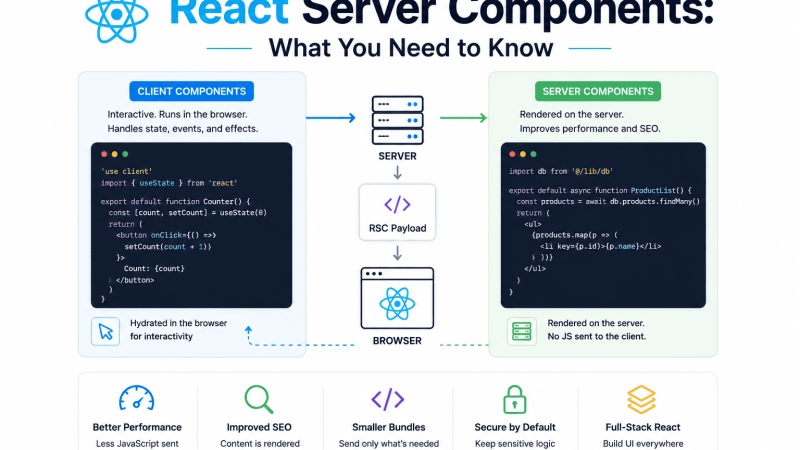
React Server Components: What You Need to Know

Introduction to React Server Components React Server Components (RSC) represent a fundamental shift in how developers build React applications, moving away from the traditional paradigm where all components run exclusively in the browser. Instead, RSC allows components to execute on the server, sending only their rendered output to the client. This change addresses long-standing challenges […]

Read More

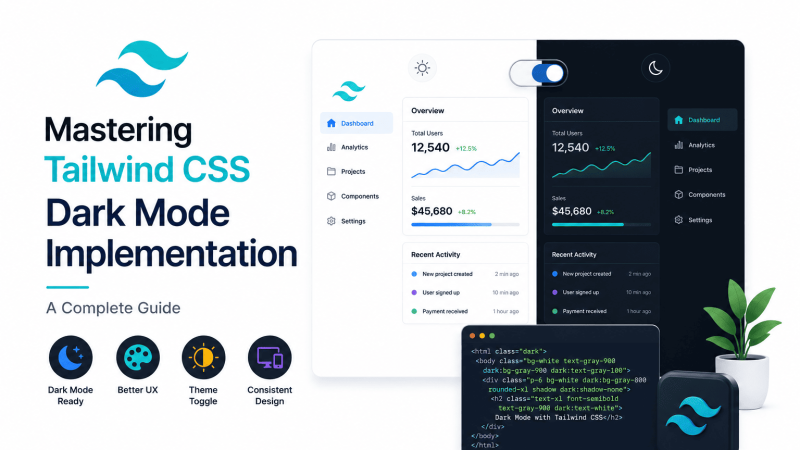
Mastering Tailwind CSS Dark Mode Implementation: A Complete Guide

Introduction to Tailwind CSS Dark Mode Dark mode has evolved from a niche preference into a standard expectation across modern web applications. Users increasingly seek interfaces that reduce eye strain, conserve battery life on OLED screens, and provide a visually soothing alternative to bright white backgrounds. Implementing dark mode traditionally required extensive CSS overrides, JavaScript […]

Read More

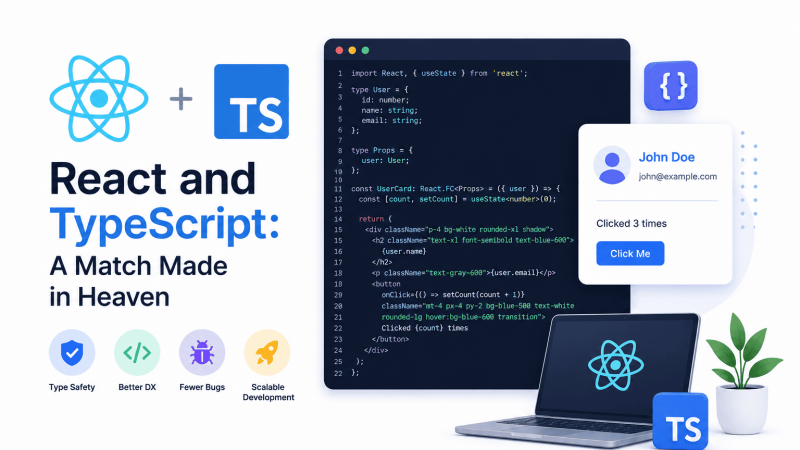
React and TypeScript: A Match Made in Heaven

Introduction: Why React and TypeScript Work So Well Together The partnership between React and TypeScript has become a cornerstone of modern frontend development, offering a synergy that elevates both productivity and code quality. React’s component-based architecture naturally benefits from TypeScript’s static type system, which catches errors at compile time rather than runtime. This combination reduces […]

Read More

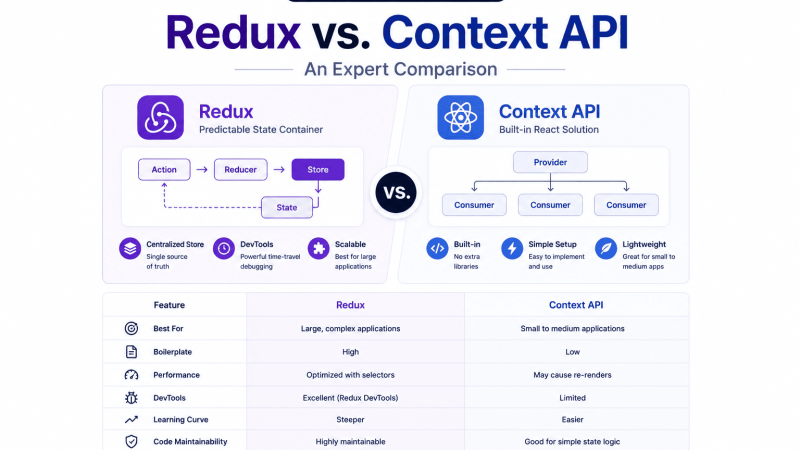
React State Management: Redux vs. Context API – An Expert Comparison

Introduction to State Management in React State management is the backbone of any dynamic React application, dictating how data flows, updates, and renders across components. As applications grow in complexity, managing state locally within individual components becomes increasingly untenable. The core challenge lies in maintaining a predictable, debuggable data flow while avoiding deeply nested prop […]

Read More

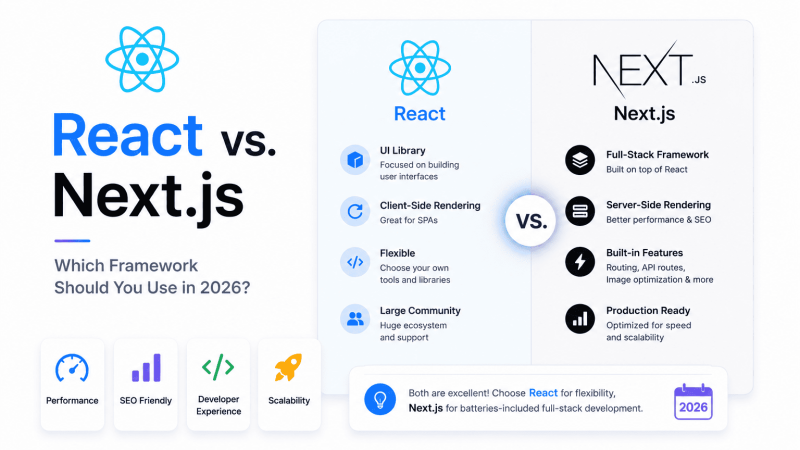
React vs. Next.js: Which Framework Should You Use in 2026?

1. Introduction: The State of Frontend Development in 2026 As the frontend ecosystem matures into 2026, the line between client-side rendering and server-side processing has all but vanished. Developers now demand frameworks that seamlessly blend static site generation, server-side rendering, incremental hydration, and edge computing—all without sacrificing developer ergonomics. React and Next.js, long intertwined, have […]

Read More

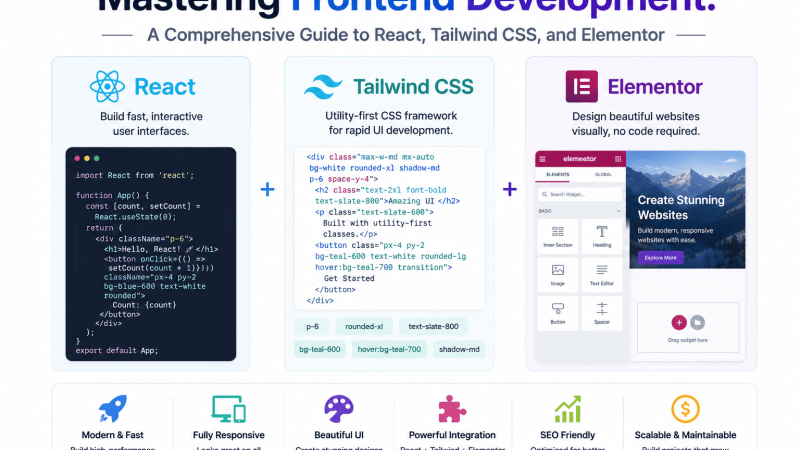
Mastering Frontend Development: A Comprehensive Guide to React, Tailwind CSS, and Elementor

Introduction to Modern Frontend Development The frontend development landscape has transformed dramatically over the past decade, shifting from static HTML pages to dynamic, component-driven architectures that prioritize user experience and performance. Today, developers face a vast ecosystem of tools, libraries, and frameworks, each promising speed, scalability, or simplicity. Among these, three tools have emerged as […]

Read More