Azim Uddin

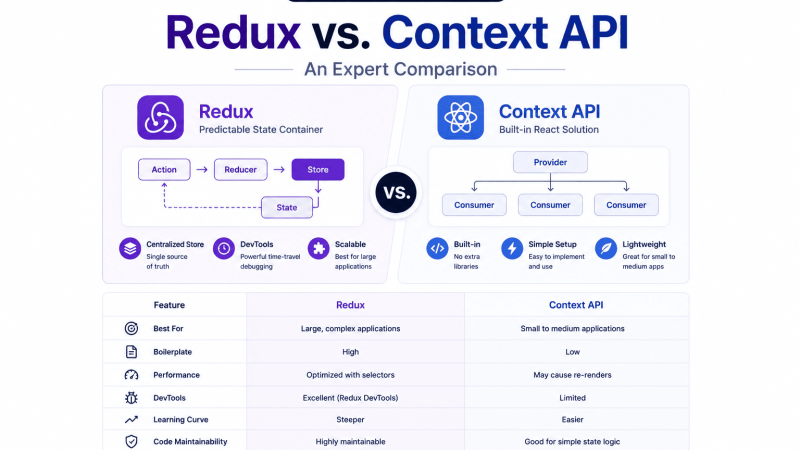
React State Management: Redux vs. Context API – An Expert Comparison

Introduction to State Management in React State management is the backbone of any dynamic React application, dictating how data flows, updates, and renders across components. As applications grow in complexity, managing state locally within individual components becomes increasingly untenable. The core challenge lies in maintaining a predictable, debuggable data flow while avoiding deeply nested prop […]
Read More

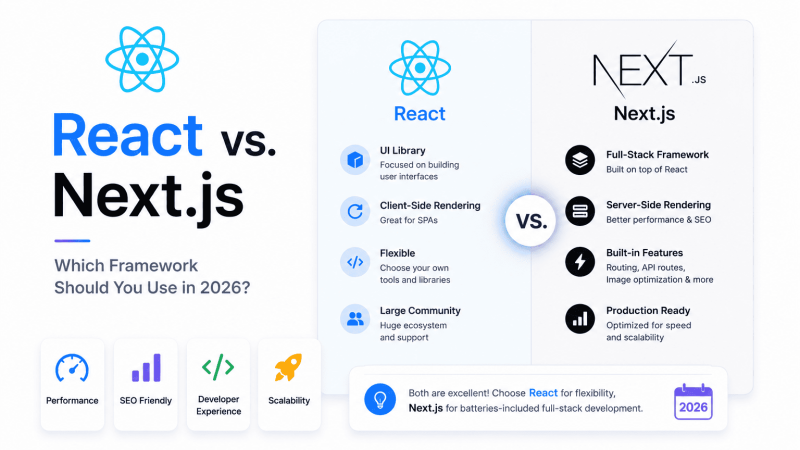
React vs. Next.js: Which Framework Should You Use in 2026?

1. Introduction: The State of Frontend Development in 2026 As the frontend ecosystem matures into 2026, the line between client-side rendering and server-side processing has all but vanished. Developers now demand frameworks that seamlessly blend static site generation, server-side rendering, incremental hydration, and edge computing—all without sacrificing developer ergonomics. React and Next.js, long intertwined, have […]

Read More

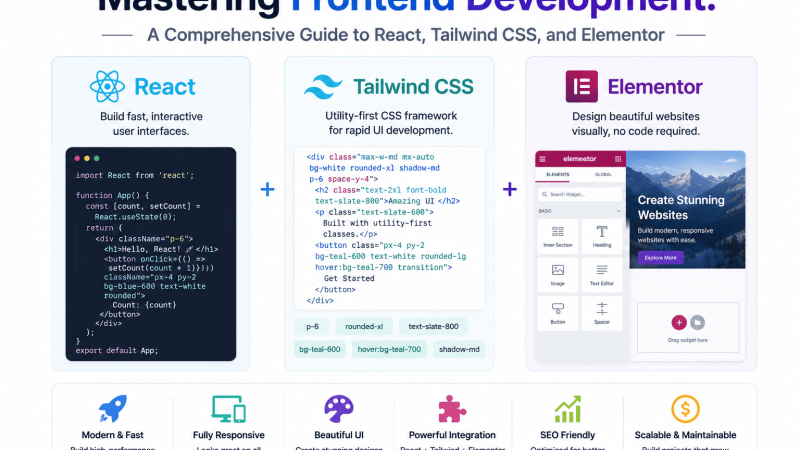
Mastering Frontend Development: A Comprehensive Guide to React, Tailwind CSS, and Elementor

Introduction to Modern Frontend Development The frontend development landscape has transformed dramatically over the past decade, shifting from static HTML pages to dynamic, component-driven architectures that prioritize user experience and performance. Today, developers face a vast ecosystem of tools, libraries, and frameworks, each promising speed, scalability, or simplicity. Among these, three tools have emerged as […]

Read More

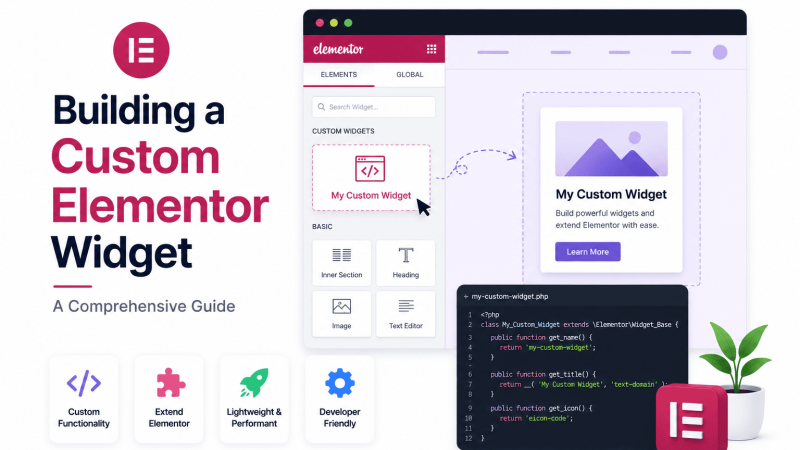
Building a Custom Elementor Widget: A Comprehensive Guide

Introduction to Custom Elementor Widgets Elementor’s widget system is the backbone of its drag-and-drop page builder, offering a library of prebuilt components—from headings and images to forms and sliders—that users can arrange visually. Each widget is a self-contained PHP class that registers with Elementor, defining its controls, rendering logic, and front-end output. When you drag […]

Read More

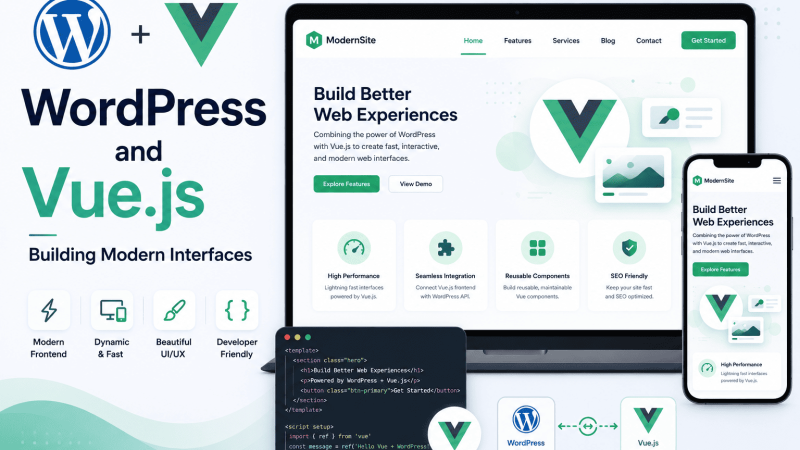
WordPress and Vue.js: Building Modern Interfaces

Introduction: The Case for Combining WordPress with Vue.js The modern web demands interfaces that are both dynamic and performant, pushing developers to reevaluate traditional content management paradigms. WordPress, which powers over 40% of all websites, has evolved far beyond its origins as a blogging platform. Meanwhile, Vue.js, a progressive JavaScript framework, offers a lightweight, reactive […]

Read More

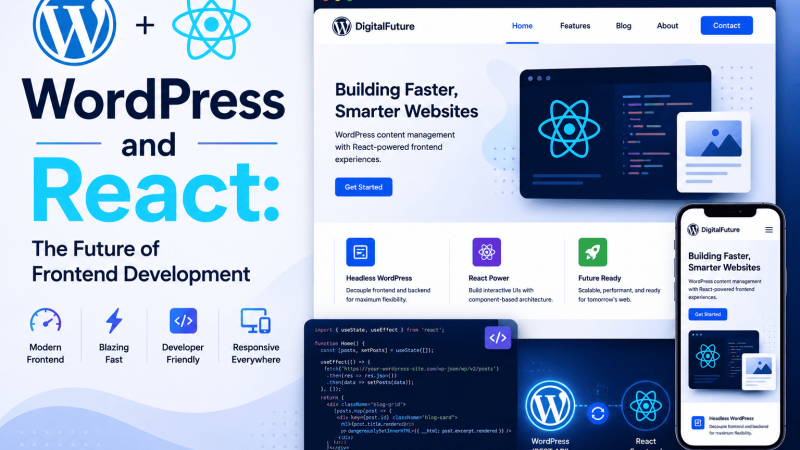
WordPress and React: The Future of Frontend Development

Introduction: The Convergence of Two Giants WordPress began its journey in 2003 as a simple blogging platform, but over two decades it has evolved into the world’s most widely used content management system, powering over 40% of all websites. Its growth from a monolithic PHP-based system to a flexible CMS with a plugin ecosystem and […]

Read More

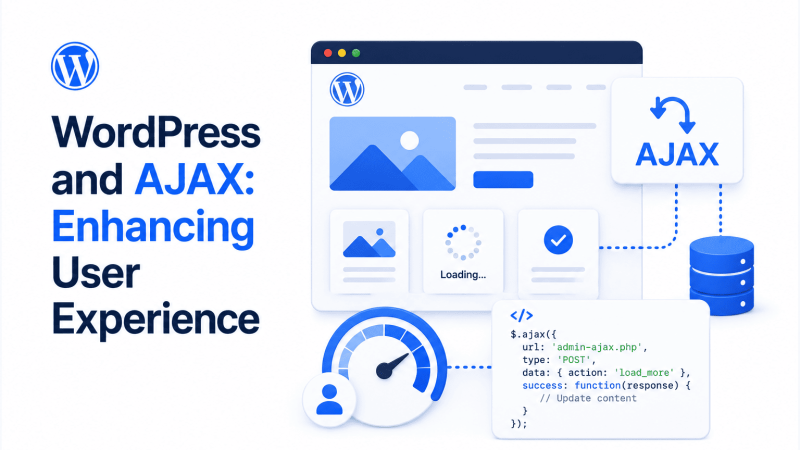
WordPress and AJAX: Enhancing User Experience

Introduction to AJAX in WordPress AJAX, which stands for Asynchronous JavaScript and XML, is a set of web development techniques that allows a webpage to communicate with a server in the background without requiring a full page reload. In the context of WordPress, AJAX transforms static content delivery into a fluid, interactive experience. Instead of […]

Read More