Azim Uddin

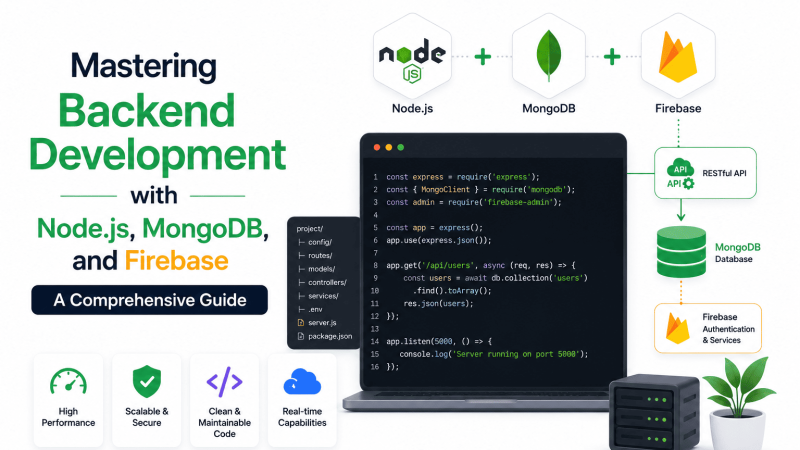
Mastering Backend Development with Node.js, MongoDB, and Firebase: A Comprehensive Guide

Introduction to Backend Development with Node.js, MongoDB, and Firebase Modern backend development demands a stack that balances performance, scalability, and real-time capabilities. Node.js, MongoDB, and Firebase together provide a robust foundation for building data-driven applications. Node.js offers an asynchronous, event-driven runtime ideal for handling concurrent requests, while MongoDB delivers flexible, document-oriented storage that scales horizontally. […]
Read More

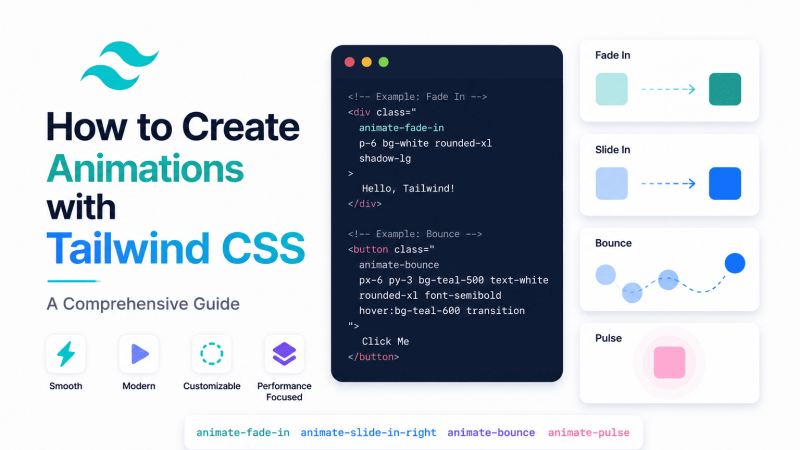
How to Create Animations with Tailwind CSS: A Comprehensive Guide

Introduction to Tailwind CSS Animations Tailwind CSS offers a robust set of built-in animation utilities that allow developers to add motion to web projects quickly and efficiently, without writing custom CSS keyframes or transitions. These utilities are designed to work seamlessly with Tailwind’s utility-first approach, enabling you to apply animations directly in your HTML by […]

Read More

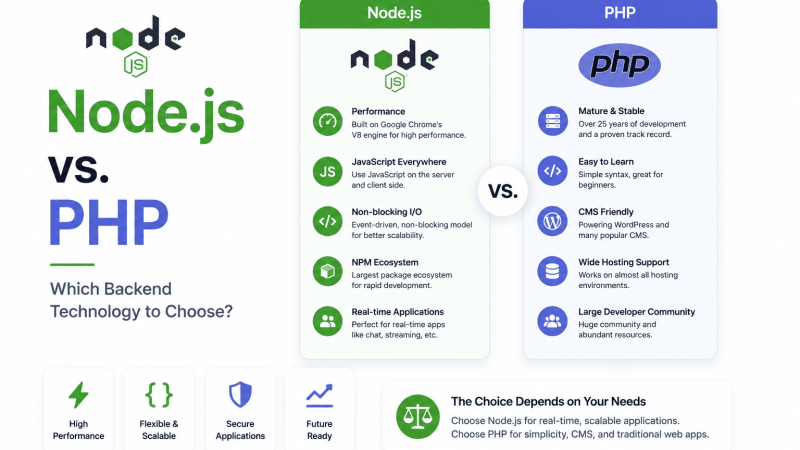
Node.js vs. PHP: Which Backend Technology to Choose?

Introduction: The Backend Dilemma in Modern Web Development The choice between Node.js and PHP represents one of the most consequential decisions in modern backend development. Both technologies power millions of websites and applications, yet they approach the server-side challenge from fundamentally different angles. PHP, born in 1994, emerged as a straightforward scripting language designed to […]

Read More

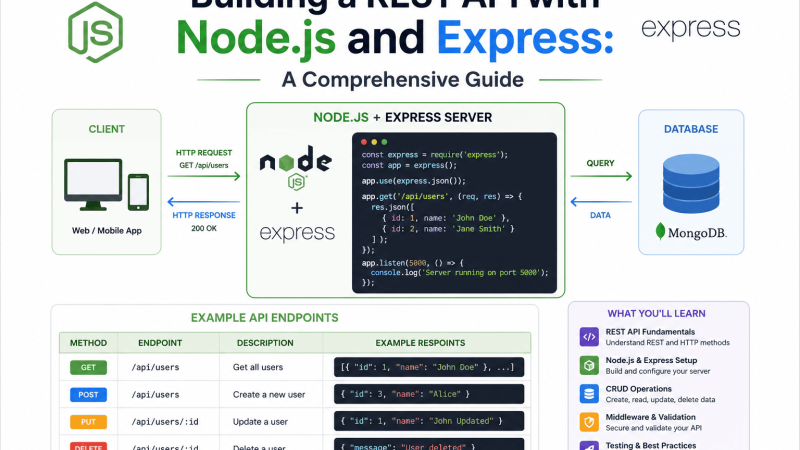
Building a REST API with Node.js and Express: A Comprehensive Guide

Introduction to REST APIs and Node.js What is a REST API? Key Principles and Constraints A REST (Representational State Transfer) API is an architectural style for designing networked applications that rely on stateless, cacheable communication via HTTP. It enables clients and servers to exchange resources—such as data objects or files—using standard HTTP methods like GET, […]

Read More

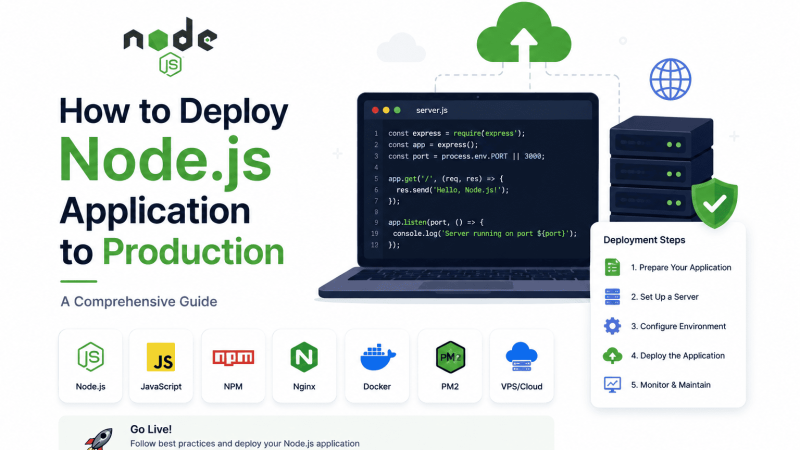
How to Deploy a Node.js Application to Production: A Comprehensive Guide

1. Preparing Your Node.js Application for Deployment Before pushing your Node.js application to a production server, you must ensure it is robust, secure, and optimized for real-world traffic. Production environments differ significantly from development setups, with stricter performance, reliability, and security requirements. Proper preparation minimizes downtime, prevents data leaks, and ensures your application scales gracefully […]

Read More

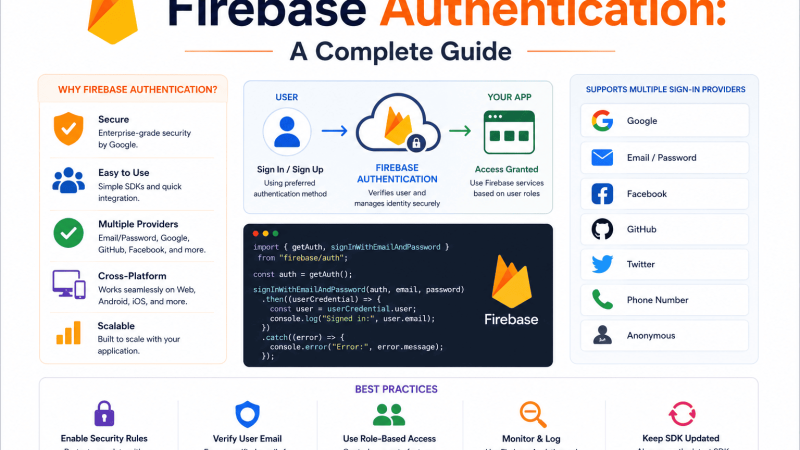
Firebase Authentication: A Complete Guide

Introduction to Firebase Authentication What Is Firebase Authentication? Firebase Authentication is a backend-as-a-service solution for managing user identity in web, mobile, and server applications. It abstracts the complexity of building secure authentication infrastructure by providing pre-built UI components, client SDKs, and server-side libraries. Developers can authenticate users using email and password combinations, phone numbers, or […]

Read More

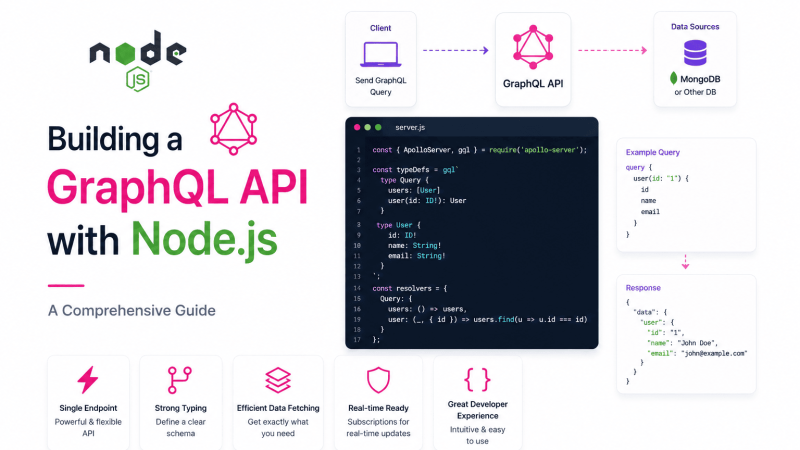
Building a GraphQL API with Node.js: A Comprehensive Guide

Introduction to GraphQL and Node.js What Is GraphQL and How It Differs from REST GraphQL is a query language and runtime for APIs, developed by Facebook in 2012 and open-sourced in 2015. Unlike traditional REST APIs, which expose multiple endpoints returning fixed data structures, GraphQL provides a single endpoint where clients can precisely request the […]

Read More

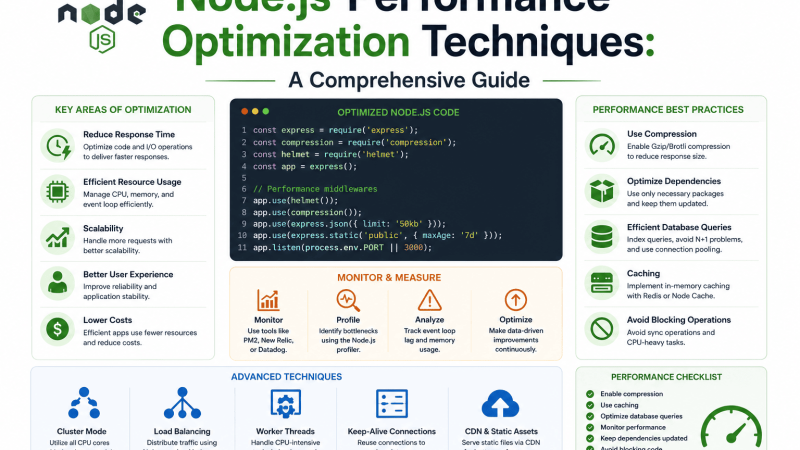
Node.js Performance Optimization Techniques: A Comprehensive Guide

Introduction to Node.js Performance Optimization Performance is a critical pillar of any production-grade Node.js application. A slow or unresponsive server directly degrades user experience, increases operational costs, and can lead to significant revenue loss. Node.js, built on Chrome’s V8 engine, is designed for high-throughput, non-blocking I/O operations, but it is not immune to performance degradation. […]

Read More

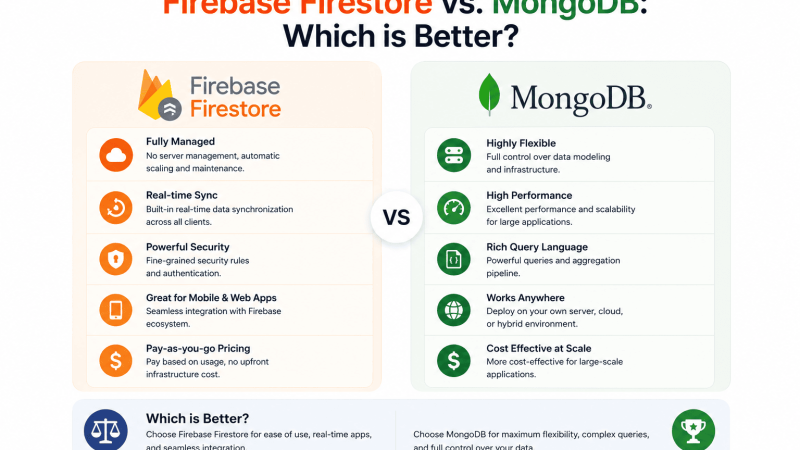
Firebase Firestore vs. MongoDB: Which is Better?

Introduction: The NoSQL Database Dilemma Modern applications demand databases that can handle high velocity, diverse data types, and seamless real-time updates. Traditional relational databases, while powerful for structured data and complex joins, often struggle under the weight of dynamic schemas and horizontal scaling needs. This tension has fueled the rapid adoption of NoSQL databases, which […]

Read More

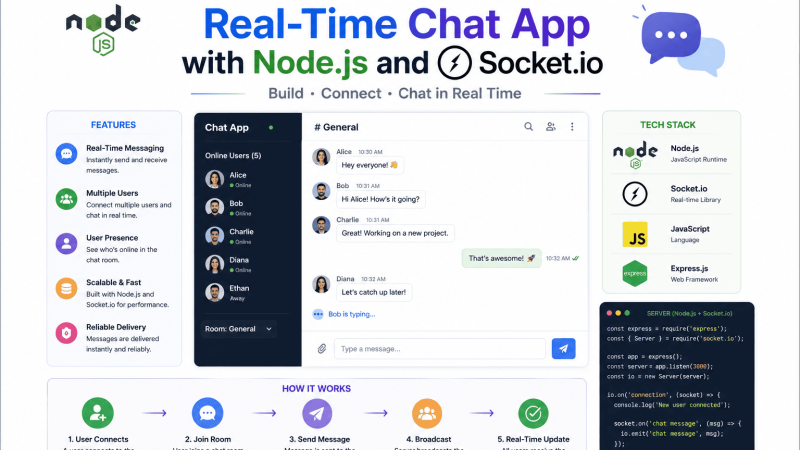
How to Build a Real-Time Chat App with Node.js and Socket.io

1. Introduction to Real-Time Chat Applications Real-time chat applications have transformed how individuals and organizations communicate online, enabling instantaneous message exchange without the perceptible delay typical of traditional web interactions. Unlike standard HTTP-based communication, where a user must refresh a page or wait for a periodic update, real-time systems push data to clients the moment […]

Read More