Hi, I’m Azim Uddin

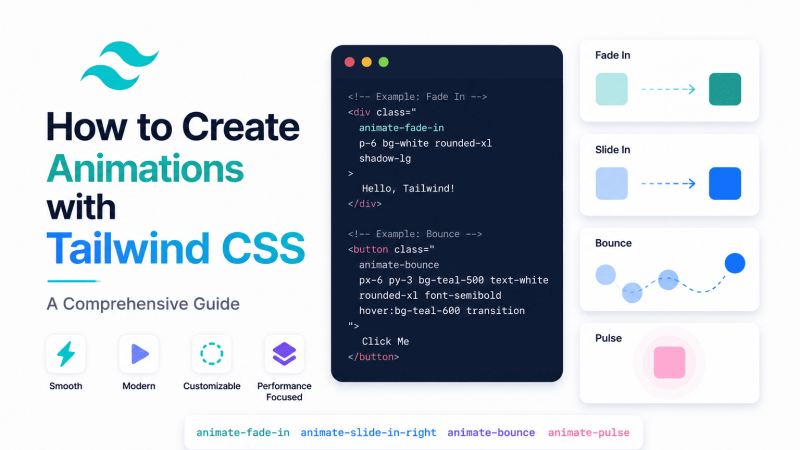
How to Create Animations with Tailwind CSS: A Comprehensive Guide

Introduction to Tailwind CSS Animations Tailwind CSS offers a robust set of built-in animation utilities that allow developers to add motion to web projects quickly and efficiently, without writing custom CSS keyframes or transitions. These utilities are designed to work seamlessly with Tailwind’s utility-first approach, enabling you to apply animations directly in your HTML by […]
Read More

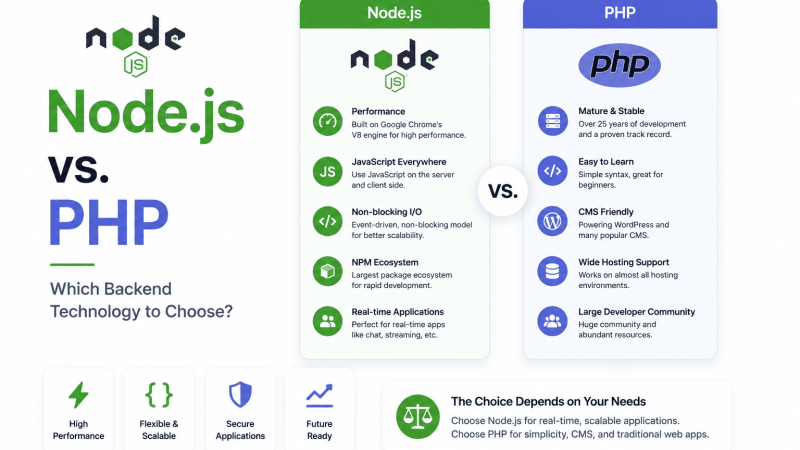
Node.js vs. PHP: Which Backend Technology to Choose?

Introduction: The Backend Dilemma in Modern Web Development The choice between Node.js and PHP represents one of the most consequential decisions in modern backend development. Both technologies power millions of websites and applications, yet they approach the server-side challenge from fundamentally different angles. PHP, born in 1994, emerged as a straightforward scripting language designed to […]

Read More

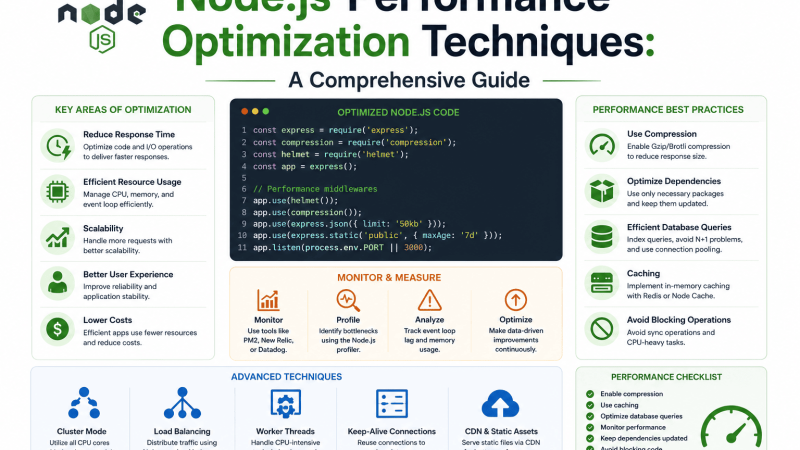
Node.js Performance Optimization Techniques: A Comprehensive Guide

Introduction to Node.js Performance Optimization Performance is a critical pillar of any production-grade Node.js application. A slow or unresponsive server directly degrades user experience, increases operational costs, and can lead to significant revenue loss. Node.js, built on Chrome’s V8 engine, is designed for high-throughput, non-blocking I/O operations, but it is not immune to performance degradation. […]

Read More

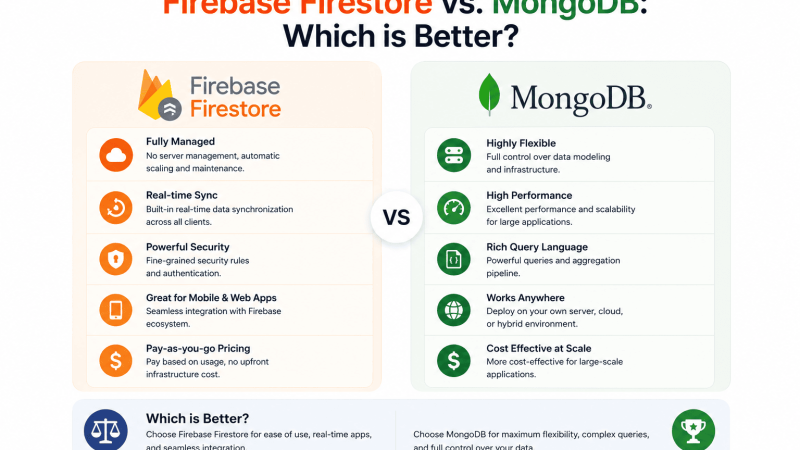
Firebase Firestore vs. MongoDB: Which is Better?

Introduction: The NoSQL Database Dilemma Modern applications demand databases that can handle high velocity, diverse data types, and seamless real-time updates. Traditional relational databases, while powerful for structured data and complex joins, often struggle under the weight of dynamic schemas and horizontal scaling needs. This tension has fueled the rapid adoption of NoSQL databases, which […]

Read More

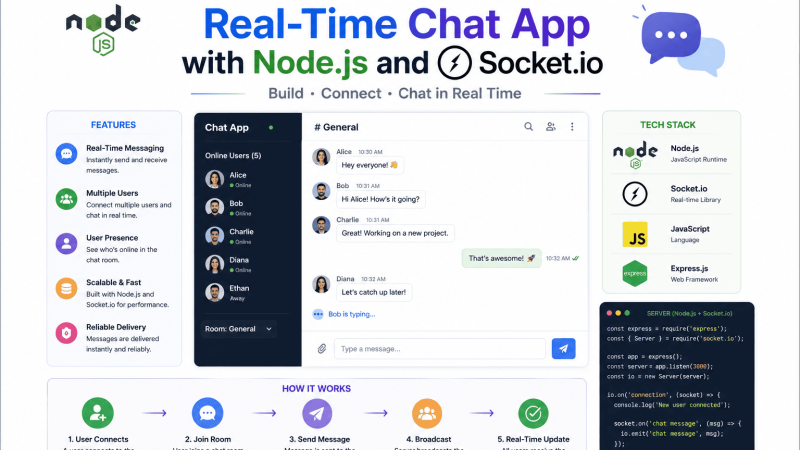
How to Build a Real-Time Chat App with Node.js and Socket.io

1. Introduction to Real-Time Chat Applications Real-time chat applications have transformed how individuals and organizations communicate online, enabling instantaneous message exchange without the perceptible delay typical of traditional web interactions. Unlike standard HTTP-based communication, where a user must refresh a page or wait for a periodic update, real-time systems push data to clients the moment […]

Read More

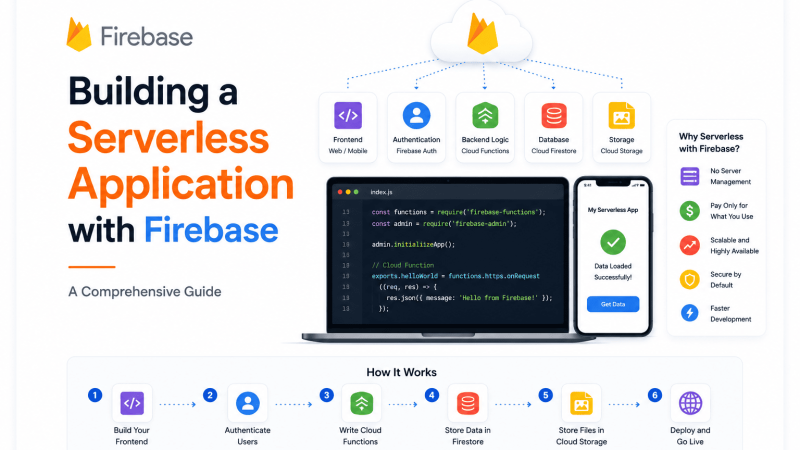
Building a Serverless Application with Firebase: A Comprehensive Guide

Introduction to Serverless Architecture and Firebase What Is Serverless Computing? Serverless computing is a cloud execution model where the cloud provider dynamically manages the allocation and provisioning of servers. Developers write and deploy code without worrying about the underlying infrastructure, such as virtual machines, containers, or operating systems. In a serverless architecture, applications are broken […]

Read More

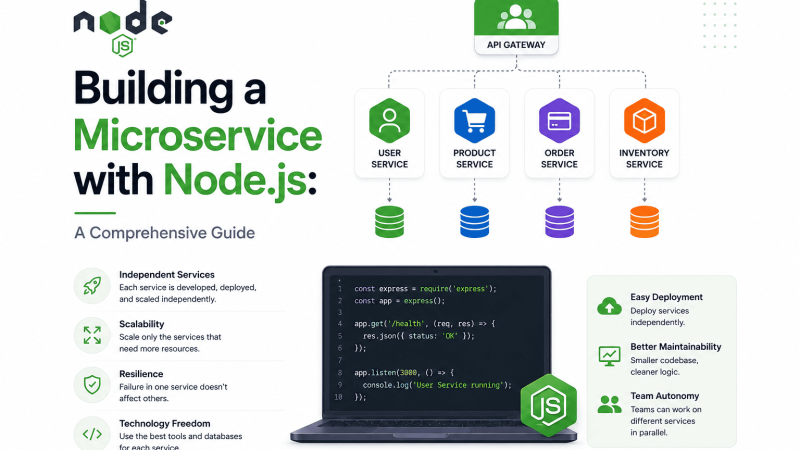
Building a Microservice with Node.js: A Comprehensive Guide

Introduction to Microservices and Node.js What Are Microservices? Microservices are an architectural approach to software development where a single application is composed of small, independent services that communicate over a network. Each service is responsible for a specific business capability and can be developed, deployed, and scaled independently. Unlike monolithic architectures, where all functionality is […]

Read More

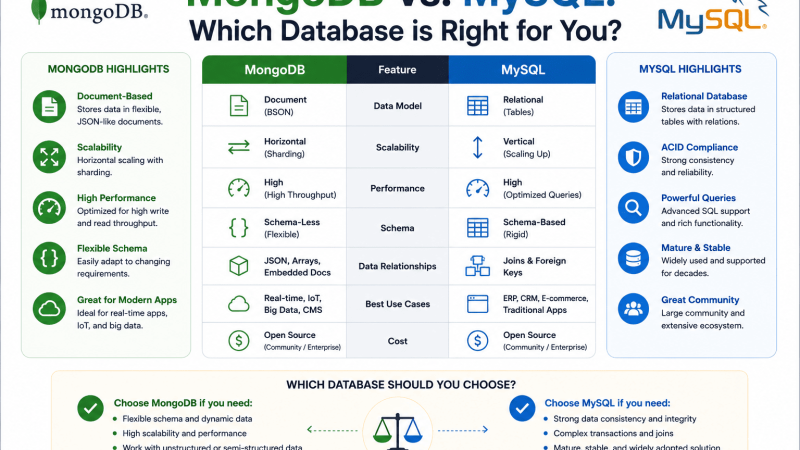
MongoDB vs. MySQL: Which Database is Right for You?

Introduction to MongoDB and MySQL Choosing the right database is a foundational decision for any application. Two of the most popular options are MongoDB and MySQL, but they represent fundamentally different approaches to data management. MongoDB is a NoSQL document store designed for flexibility and scalability, while MySQL is a relational database management system (RDBMS) […]

Read More

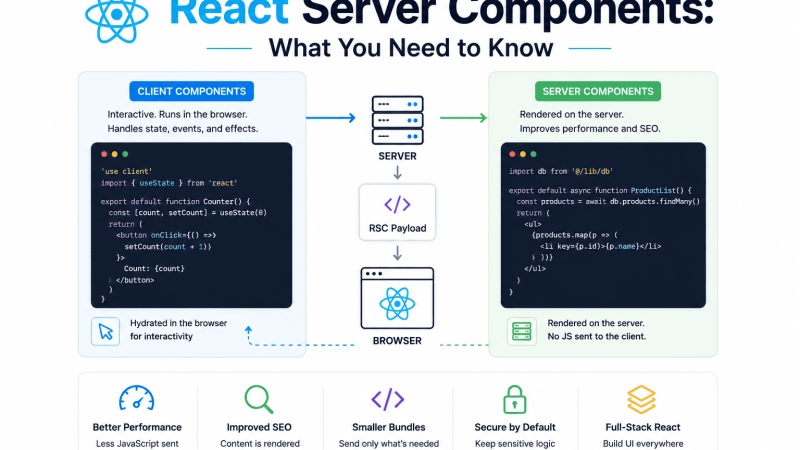
React Server Components: What You Need to Know

Introduction to React Server Components React Server Components (RSC) represent a fundamental shift in how developers build React applications, moving away from the traditional paradigm where all components run exclusively in the browser. Instead, RSC allows components to execute on the server, sending only their rendered output to the client. This change addresses long-standing challenges […]

Read More

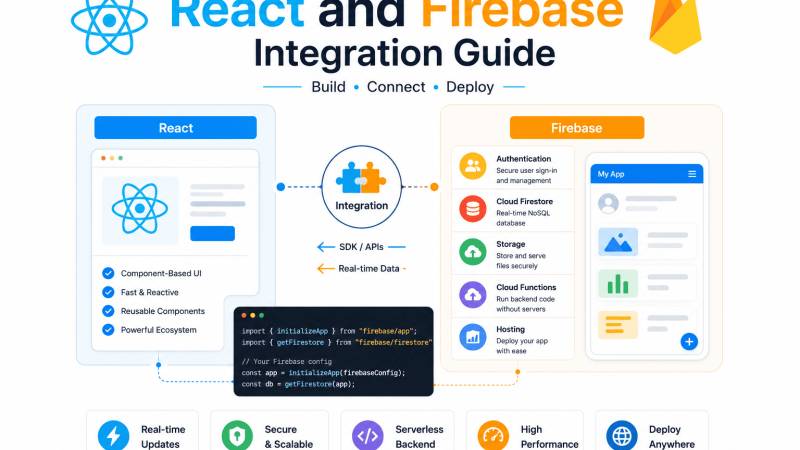
React and Firebase Integration Guide

Introduction to React and Firebase The combination of React and Firebase has become a cornerstone for modern web development, enabling developers to build full-stack applications without the overhead of managing traditional server infrastructure. React, a JavaScript library for building user interfaces, provides the frontend layer, while Firebase, a Backend-as-a-Service (BaaS) platform by Google, handles the […]

Read More