Azim Uddin

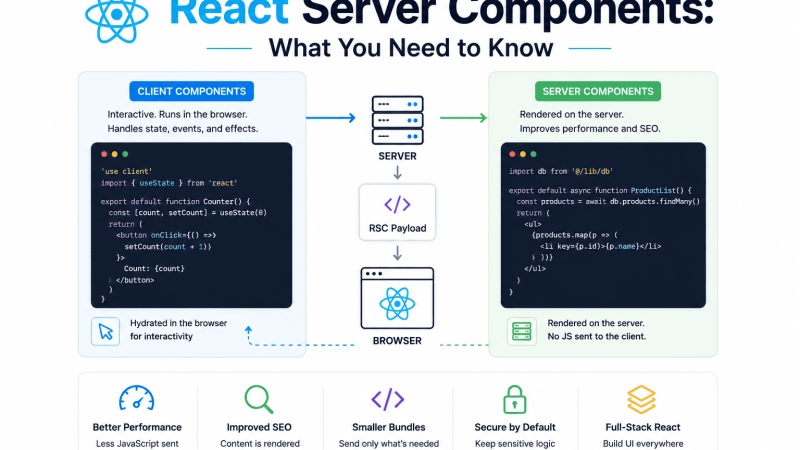
React Server Components: What You Need to Know

Introduction to React Server Components React Server Components (RSC) represent a fundamental shift in how developers build React applications, moving away from the traditional paradigm where all components run exclusively in the browser. Instead, RSC allows components to execute on the server, sending only their rendered output to the client. This change addresses long-standing challenges […]
Read More

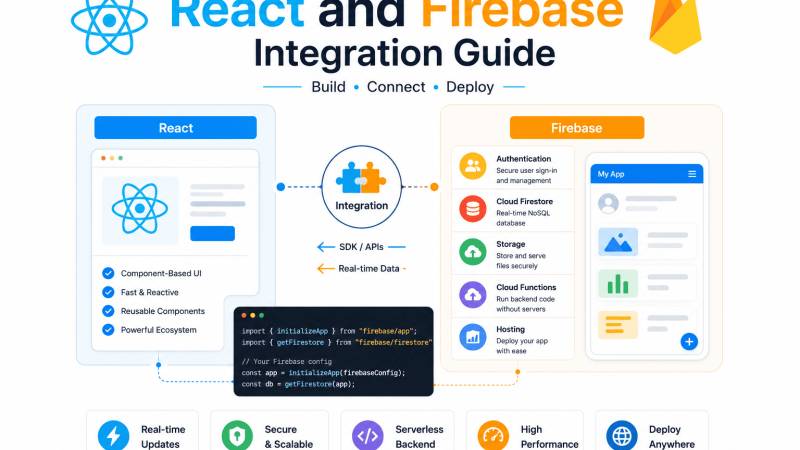
React and Firebase Integration Guide

Introduction to React and Firebase The combination of React and Firebase has become a cornerstone for modern web development, enabling developers to build full-stack applications without the overhead of managing traditional server infrastructure. React, a JavaScript library for building user interfaces, provides the frontend layer, while Firebase, a Backend-as-a-Service (BaaS) platform by Google, handles the […]

Read More

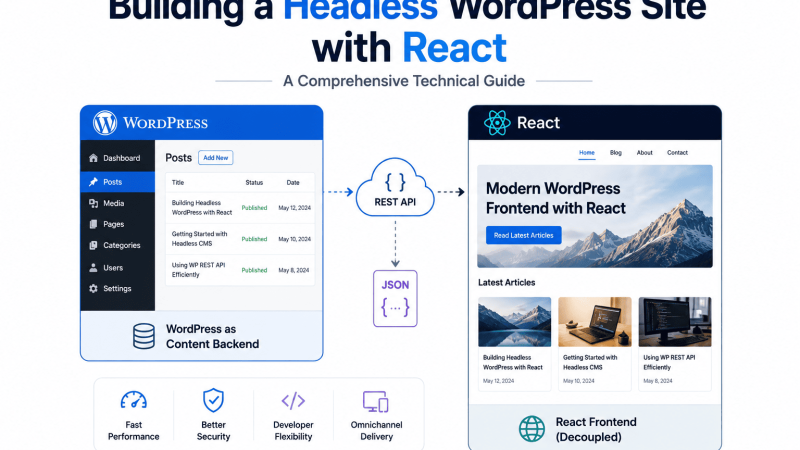
Building a Headless WordPress Site with React: A Comprehensive Technical Guide

Introduction to Headless WordPress and React Building a Headless WordPress Site with React represents a modern architectural shift that separates content management from presentation. In this model, WordPress serves exclusively as a content repository and API provider, while React handles all frontend rendering and user interaction. This decoupling enables developers to leverage WordPress’s mature editorial […]

Read More

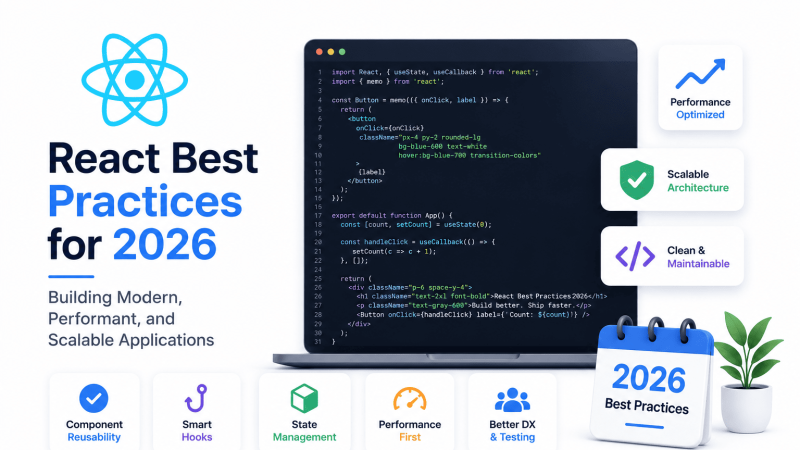
React Best Practices for 2026: Building Modern, Performant, and Scalable Applications

1. Embrace the React Server Component Paradigm By 2026, React Server Components have transitioned from an experimental feature to the foundational architecture for modern React applications, particularly within frameworks like Next.js and Remix. This paradigm shift fundamentally changes how developers approach rendering, data fetching, and bundle optimization. Instead of shipping all JavaScript to the client, […]

Read More

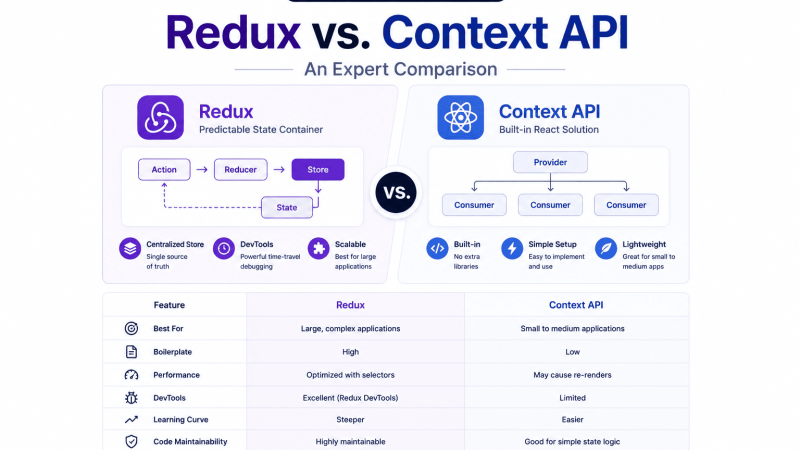
React State Management: Redux vs. Context API – An Expert Comparison

Introduction to State Management in React State management is the backbone of any dynamic React application, dictating how data flows, updates, and renders across components. As applications grow in complexity, managing state locally within individual components becomes increasingly untenable. The core challenge lies in maintaining a predictable, debuggable data flow while avoiding deeply nested prop […]

Read More

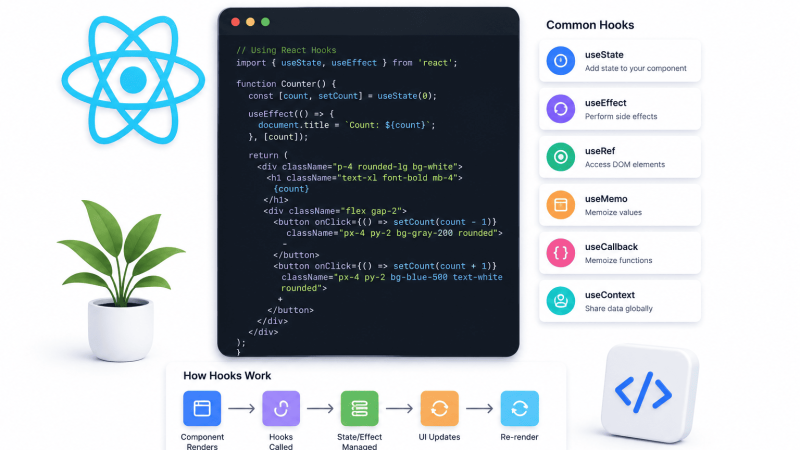
React Hooks: A Complete Guide for Beginners

Introduction to React Hooks What Are React Hooks? React Hooks are functions that let you use state and lifecycle features in function components without writing a class. Introduced in React 16.8, they provide a more direct API for managing component logic. Hooks allow you to reuse stateful behavior across components, making your code more modular […]

Read More

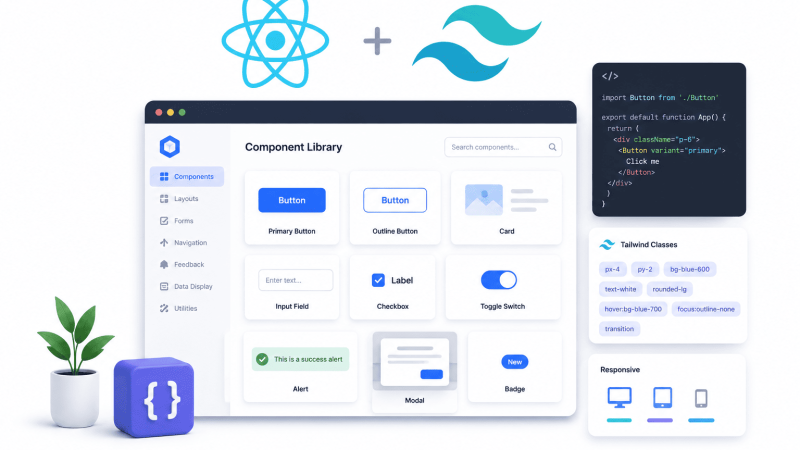
Building a Component Library with React and Tailwind

Introduction: Why Build a Component Library with React and Tailwind In modern web development, teams face a persistent tension between speed and consistency. A component library built with React and Tailwind CSS offers a pragmatic resolution: a centralized collection of reusable UI elements that enforce design standards while accelerating development velocity. By combining React’s declarative, […]

Read More