Azim Uddin

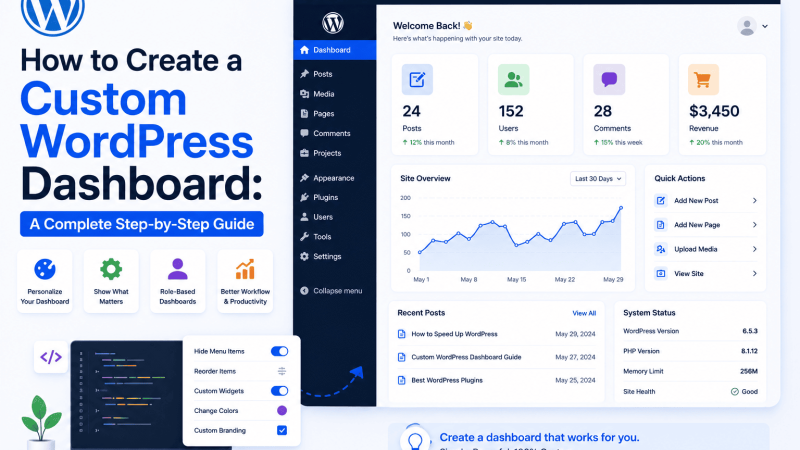
How to Create a Custom WordPress Dashboard: A Complete Step-by-Step Guide

1. Why Customize Your WordPress Dashboard? The WordPress dashboard is the command center for your website, but its default layout is designed for a broad audience, not for your specific needs. A custom dashboard transforms this generic interface into a streamlined tool that saves time, reduces confusion, and enhances productivity. Whether you manage multiple sites, […]
Read More

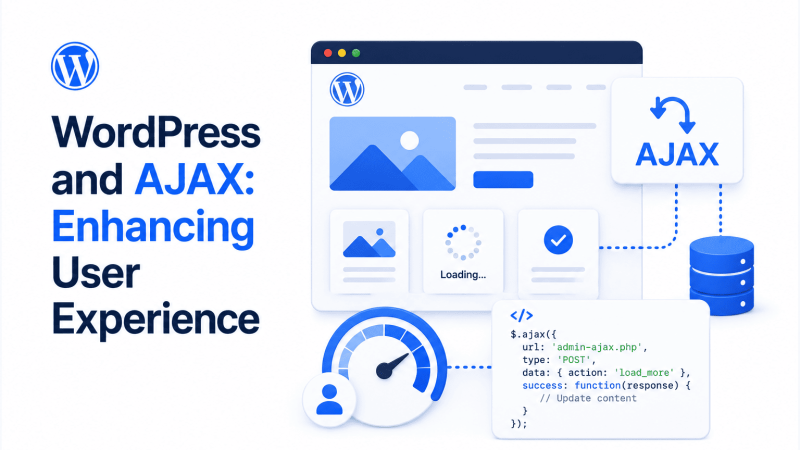
WordPress and AJAX: Enhancing User Experience

Introduction to AJAX in WordPress AJAX, which stands for Asynchronous JavaScript and XML, is a set of web development techniques that allows a webpage to communicate with a server in the background without requiring a full page reload. In the context of WordPress, AJAX transforms static content delivery into a fluid, interactive experience. Instead of […]

Read More

WordPress Shortcodes: A Complete Guide

Introduction to WordPress Shortcodes WordPress shortcodes are small, bracketed code snippets that allow users to execute predefined functions within posts, pages, or widgets without writing any PHP. Introduced in WordPress 2.5, these compact tags—like or —replace complex code with a simple, user-friendly syntax. They enable anyone to embed dynamic content such as galleries, videos, forms, […]

Read More

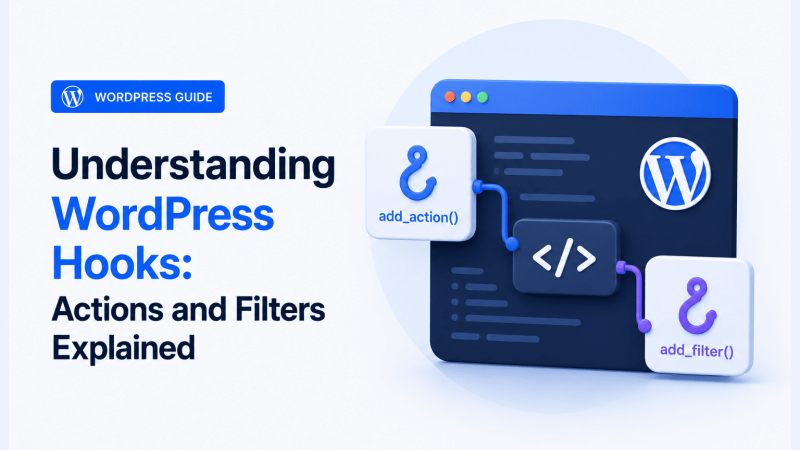
Understanding WordPress Hooks: Actions and Filters Explained

Introduction to WordPress Hooks WordPress hooks are a fundamental mechanism that allows developers to modify or extend the behavior of WordPress without altering its core files. They act as predefined points in the WordPress execution flow where custom code can be inserted, enabling actions like adding content, changing data, or injecting functionality. For developers and […]

Read More

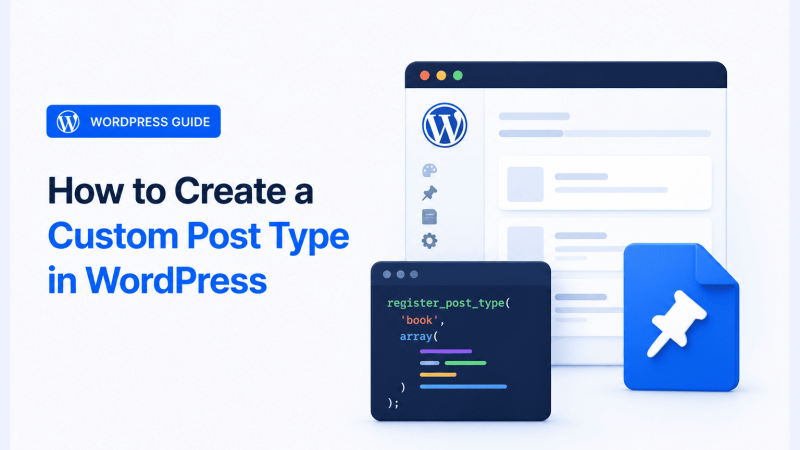
How to Create a Custom Post Type in WordPress: A Complete Developer’s Guide

Introduction to Custom Post Types WordPress began as a blogging platform, but it has evolved into a full-featured content management system (CMS) that powers over 40% of the web. At its core, WordPress organizes content into two default content types: posts (for blog entries, often displayed in reverse chronological order) and pages (for static, hierarchical […]

Read More

The Ultimate Guide to WordPress Plugin Development

Introduction to WordPress Plugin Development WordPress powers over 40% of all websites on the internet, and its flexibility comes largely from its plugin architecture. A plugin is a package of code that extends or modifies the core functionality of a WordPress site without altering the core files. This means you can add features—from simple contact […]

Read More

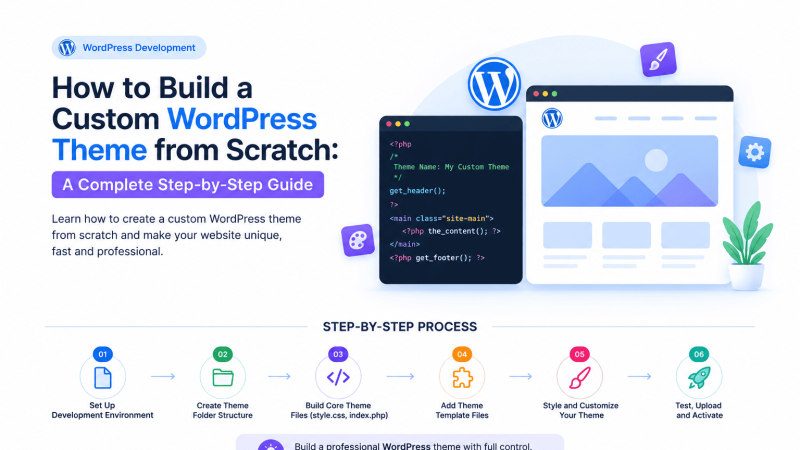
How to Build a Custom WordPress Theme from Scratch: A Complete Step-by-Step Guide

1. Setting Up Your Local Development Environment Before you write a single line of PHP, CSS, or JavaScript for your custom WordPress theme, you must establish a reliable local development environment. This foundational step ensures you can test your theme’s functionality, debug errors, and iterate rapidly without affecting a live website. A proper setup includes […]

Read More

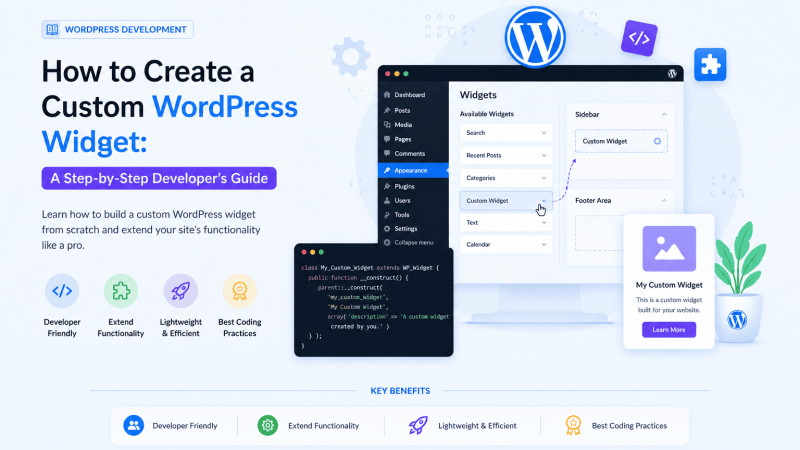
How to Create a Custom WordPress Widget: A Step-by-Step Developer’s Guide

Introduction to WordPress Widgets and Why Build Custom WordPress widgets are modular blocks of content that can be added to widget-ready areas in a theme, such as sidebars, footers, or custom widget zones. They enable site owners to easily manage and display dynamic content—like recent posts, search bars, or custom menus—without editing code. For developers, […]

Read More

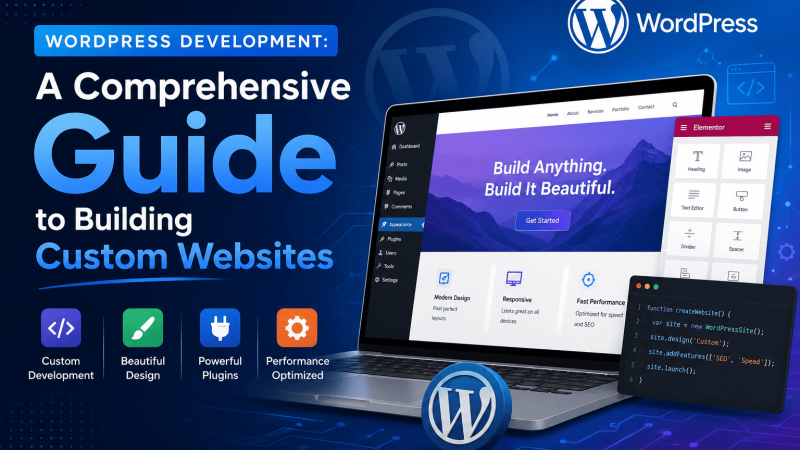
WordPress Development: A Comprehensive Guide to Building Custom Websites

Introduction to WordPress Development WordPress began as a simple blogging platform in 2003, but over two decades it has evolved into the most widely used content management system (CMS) on the internet, powering over 40% of all websites. In the context of modern web development, WordPress is no longer just a tool for publishing blog […]

Read More