Azim Uddin

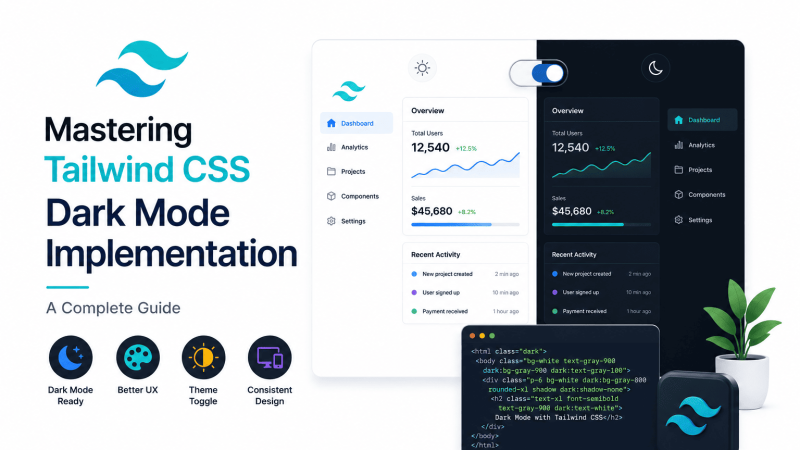
Mastering Tailwind CSS Dark Mode Implementation: A Complete Guide

Introduction to Tailwind CSS Dark Mode Dark mode has evolved from a niche preference into a standard expectation across modern web applications. Users increasingly seek interfaces that reduce eye strain, conserve battery life on OLED screens, and provide a visually soothing alternative to bright white backgrounds. Implementing dark mode traditionally required extensive CSS overrides, JavaScript […]
Read More

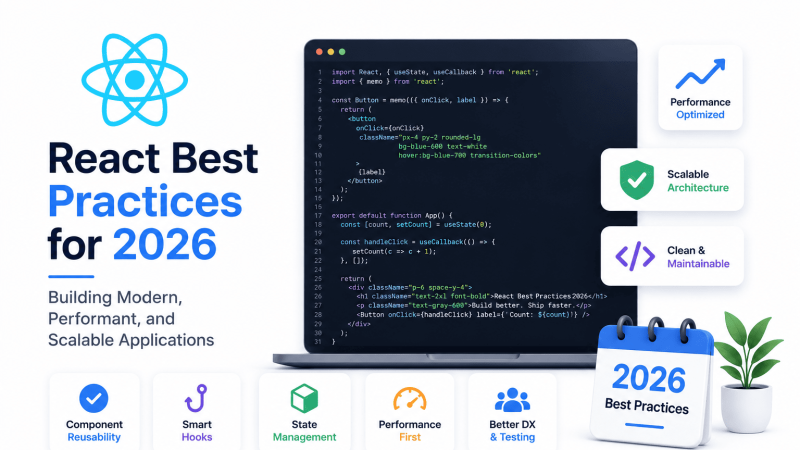
React Best Practices for 2026: Building Modern, Performant, and Scalable Applications

1. Embrace the React Server Component Paradigm By 2026, React Server Components have transitioned from an experimental feature to the foundational architecture for modern React applications, particularly within frameworks like Next.js and Remix. This paradigm shift fundamentally changes how developers approach rendering, data fetching, and bundle optimization. Instead of shipping all JavaScript to the client, […]

Read More

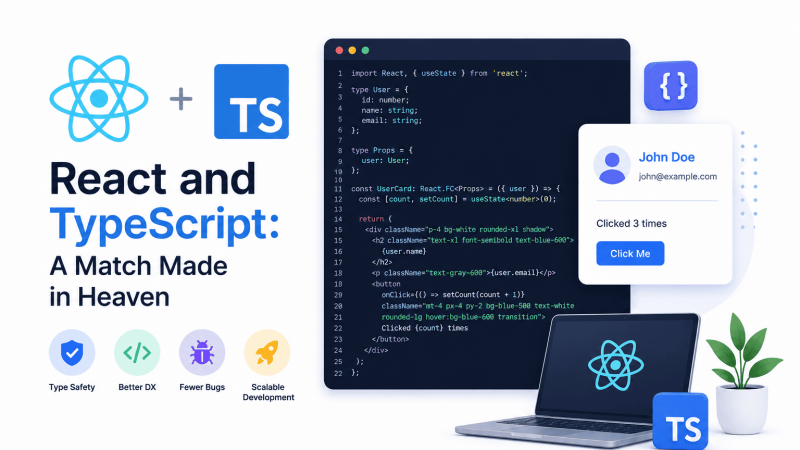
React and TypeScript: A Match Made in Heaven

Introduction: Why React and TypeScript Work So Well Together The partnership between React and TypeScript has become a cornerstone of modern frontend development, offering a synergy that elevates both productivity and code quality. React’s component-based architecture naturally benefits from TypeScript’s static type system, which catches errors at compile time rather than runtime. This combination reduces […]

Read More

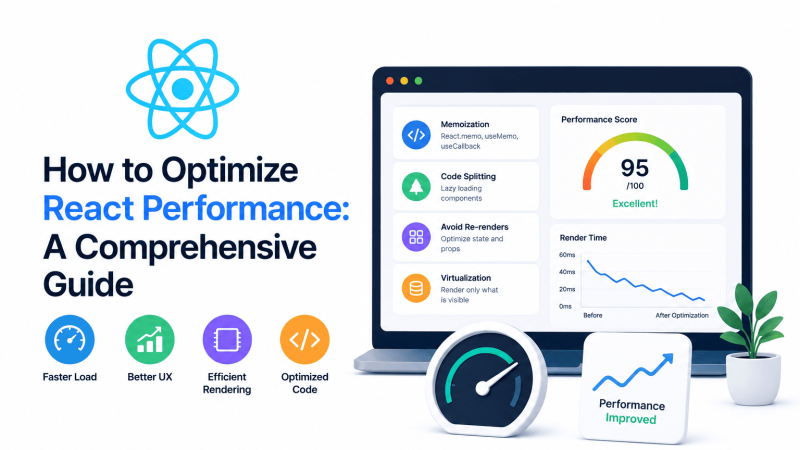
How to Optimize React Performance: A Comprehensive Guide

Introduction: Why React Performance Matters In modern web development, React offers a powerful component-based architecture that enables rich, dynamic user interfaces. However, as applications grow in complexity, performance bottlenecks can emerge, degrading user experience, harming search engine rankings, and reducing conversion rates. Users expect near-instantaneous interactions; a delay of even a few hundred milliseconds can […]

Read More

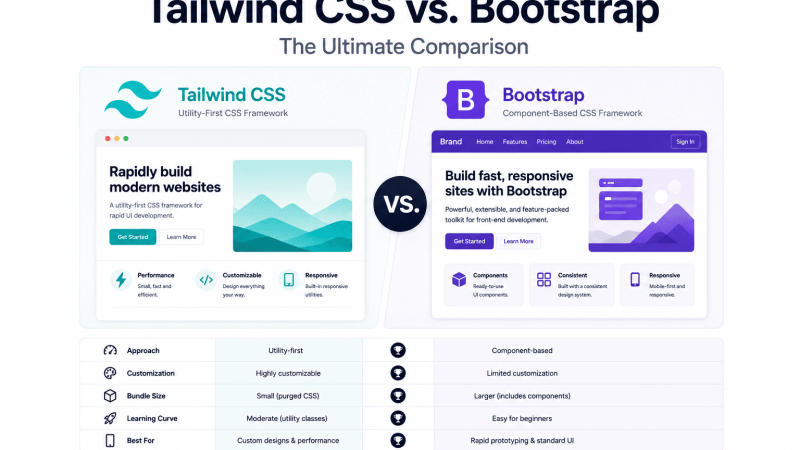
Tailwind CSS vs. Bootstrap: The Ultimate Comparison

Tailwind CSS vs. Bootstrap: The Ultimate Comparison In the landscape of modern web development, two CSS frameworks stand as titans: Bootstrap and Tailwind CSS. Each has shaped how developers approach styling, yet they embody fundamentally different philosophies. Bootstrap, launched by Twitter in 2011, revolutionized front-end work by offering a comprehensive library of prebuilt components and […]

Read More

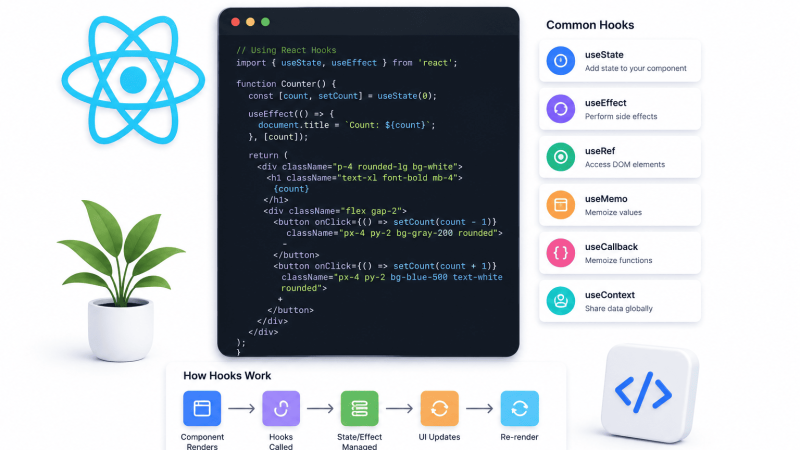
React Hooks: A Complete Guide for Beginners

Introduction to React Hooks What Are React Hooks? React Hooks are functions that let you use state and lifecycle features in function components without writing a class. Introduced in React 16.8, they provide a more direct API for managing component logic. Hooks allow you to reuse stateful behavior across components, making your code more modular […]

Read More

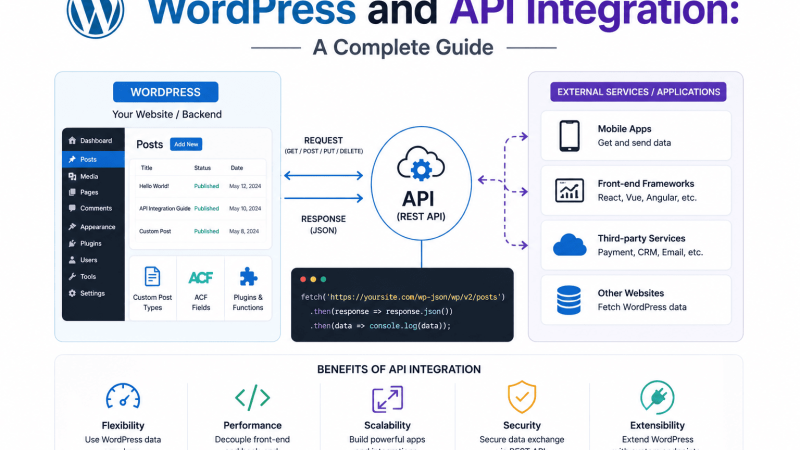
WordPress and API Integration: A Complete Guide

Introduction to API Integration in WordPress In the modern web ecosystem, a standalone WordPress site often falls short of meeting complex business or user needs. The solution lies in API integration—a technical bridge that allows your WordPress installation to communicate with external platforms, services, and data sources. This guide provides a complete overview of how […]

Read More

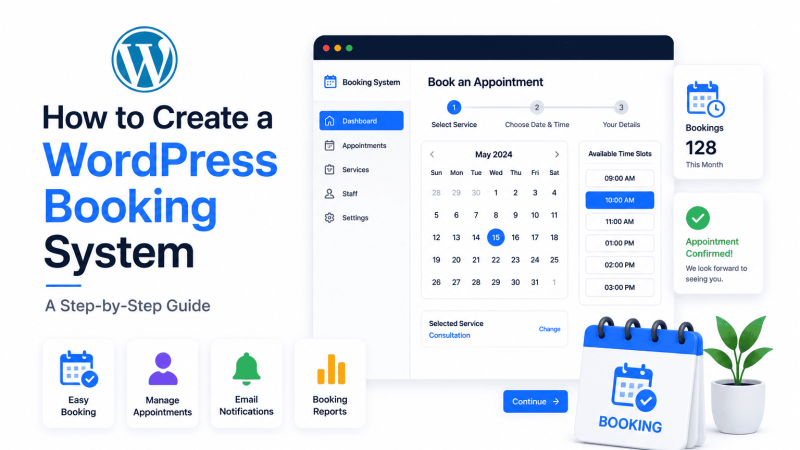
How to Create a WordPress Booking System: A Step-by-Step Guide

Introduction to Building a WordPress Booking System For service-based businesses, event organizers, and rental site owners, a seamless booking system can be the difference between a chaotic schedule and a smoothly running operation. Without one, you might rely on phone calls, emails, or manual calendar entries—processes that are prone to double-booking, delays, and lost revenue. […]

Read More

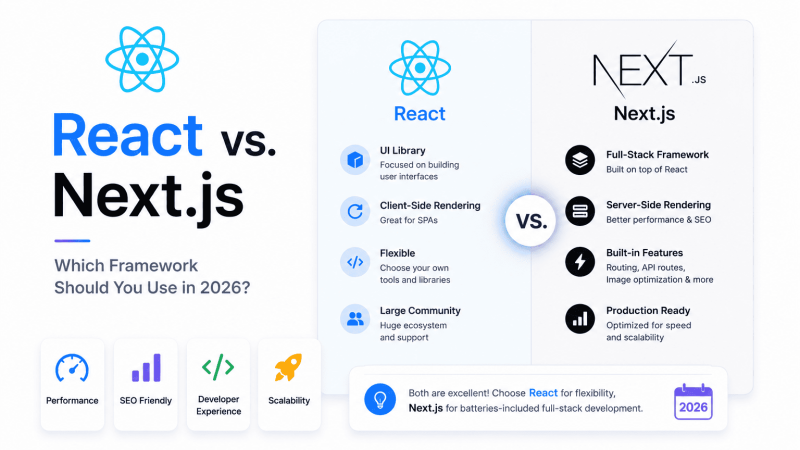
React vs. Next.js: Which Framework Should You Use in 2026?

1. Introduction: The State of Frontend Development in 2026 As the frontend ecosystem matures into 2026, the line between client-side rendering and server-side processing has all but vanished. Developers now demand frameworks that seamlessly blend static site generation, server-side rendering, incremental hydration, and edge computing—all without sacrificing developer ergonomics. React and Next.js, long intertwined, have […]

Read More

How to Create a WordPress Portfolio Site: A Step-by-Step Guide for Professionals

Why Choose WordPress for Your Portfolio When building a professional portfolio, the platform you select directly impacts how your work is presented, discovered, and managed. WordPress stands out as a premier choice because it offers unmatched flexibility, scalability, and control for showcasing creative work—whether you are a designer, photographer, developer, or writer. Unlike rigid template-based […]

Read More