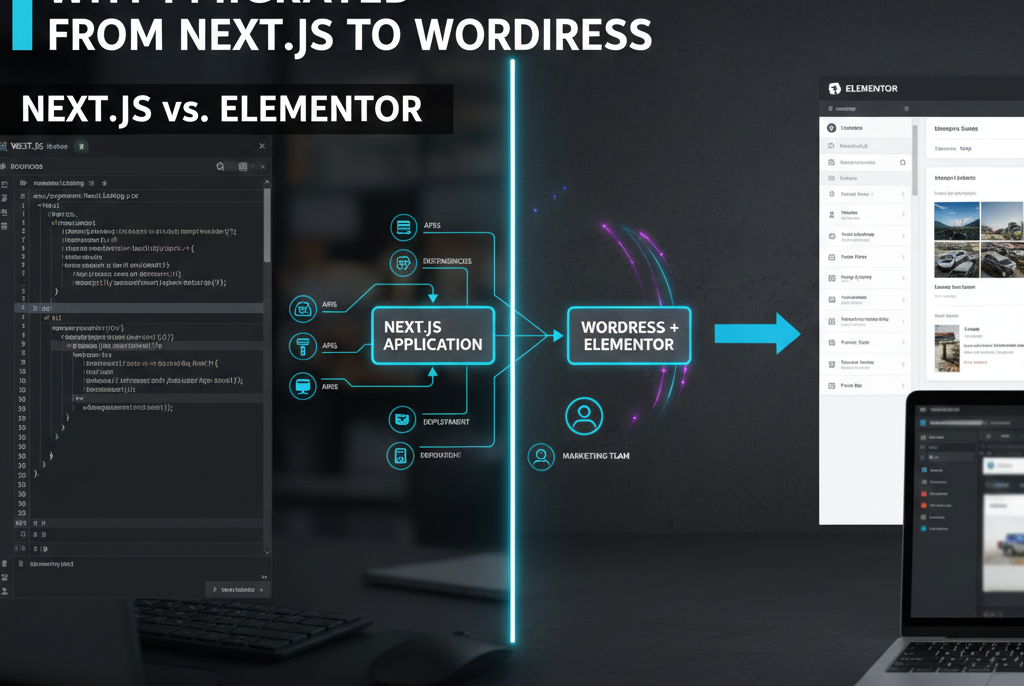

In the world of web development, there is a constant push toward the “latest and greatest.” For the past few years, that has been Next.js. It’s fast, it’s powerful, and as a developer, I love working with React.However, as a Lead Developer, my job isn’t just to write cool code—it’s to provide a solution that works for the client’s long-term business goals. Recently, I made the “controversial” decision to migrate a high-performing project back to WordPress and Elementor.
The “Editability” Crisis
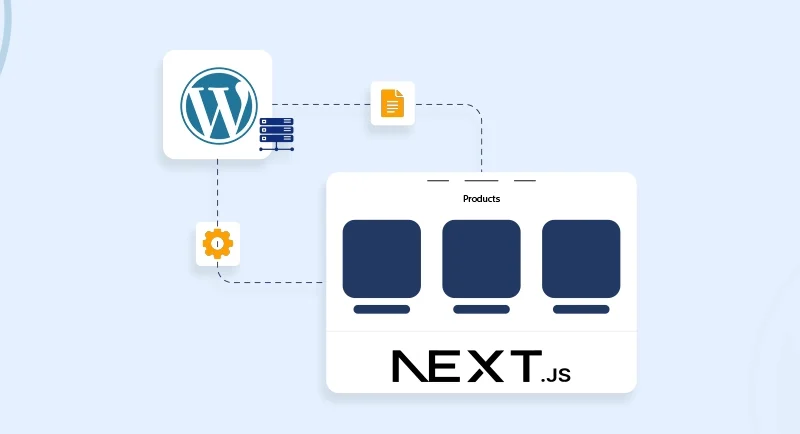
The client had a beautiful Next.js site, but every time they wanted to change a single sentence or swap a promotional banner, they had to call me.Even with a Headless CMS (like Contentful or Sanity) attached to Next.js, the marketing team felt restricted. They couldn’t build new landing pages or experiment with layouts without a developer’s help. By moving to Elementor, I handed the keys back to the marketing team. Now, they can build, test, and launch pages in hours, not days.
The Maintenance Overhead
A Next.js site is like a high-performance sports car. It’s fast, but it requires specialized maintenance. You have to manage dependencies, handle deployment pipelines, and keep an eye on breaking changes in the React ecosystem.
For this specific client, they didn’t need a sports car; they needed a reliable, powerful SUV. WordPress provides a stable ecosystem where security updates and plugin management are streamlined, reducing the monthly technical debt.
Your tech stack should be a bridge to your customers, not a barrier for your team
SEO & Speed: Closing the Gap
The biggest argument for Next.js is often speed and SEO. While Next.js is inherently fast, modern WordPress hosting combined with Elementor’s improved code output, WP Rocket, and a CDN can achieve 90+ scores on Google PageSpeed Insights.
We didn’t lose our ranking. In fact, because the marketing team was able to post more content more frequently, our organic traffic actually increased after the migration.
Is WordPress Right for You?
Next.js is still the right choice for complex web applications (like a dashboard or a social network). But if your website is a marketing tool, a portfolio, or a business marketplace, WordPress/Elementor offers a better ROI because:
- Speed of Launch: You can go from idea to live page in minutes.
- Lower Cost: Less dependency on high-priced developer hours for simple edits.
- Massive Ecosystem: Need a car rental sync? Or an automotive API? There is usually a battle-tested solution already available.
Final Thoughts
As a developer who builds in both MERN stack and WordPress, I’ve learned that the “best” tech is the one that empowers the user. Seeing my client’s marketing team confidently manage their own site is more satisfying than any complex React hook I could have written.
Need help with this topic?
Send us your details and we will contact you.